
Compiled and edited by Hamish Napier, Feb 2022.
Downloadable/printable PDF version of this page here: Session Skills – Hamish Napier Feb 2022
What is a Session?
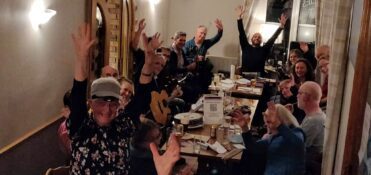
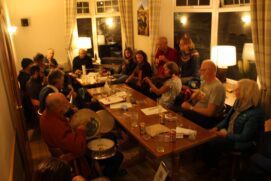
From September through to February ‘Storylands Sessions’ ran a series of folk sessions called ‘Trad Table Tunes’ in the Duke of Gordon. These events are off the cards for now, but they may return sometime in the future we hope. Instead, we are focussing our energy on our Open Mic events at the Ptarmigan Dome at Loch Insh Watersports instead – more info here.
The question of “what is a folk session and how exactly does it work” is an excellent question.. and very natural one to ask. It actually crops up a lot. So I thought I would try to explain…
A General History of Sessions
The concept of folk sessions originated in Ireland. Certain parts of Scotland have now adopted it, using Scottish tunes or a mixture of Irish and Scottish tunes.
Scotland has a long tradition of house ceilidhs, dances, group singing, piping and fiddle competitions, and other musical gatherings, however ‘sessions’ are a relatively new thing in Scotland. ‘Sandy Bells’ pub in Edinburgh and ‘The Scotia Bar’ in Glasgow were some of the first bars in Scotland to firmly establish long-running regular sessions.
 If you look up the word ‘session’ in Fintan Vallely’s AWESOME Companion to Irish Traditional Music you’ll find:
Definition “A loose association of musicians who meet, generally, but not always, in a pub to play an undetermined selection, mainly of dance music, but sometimes with solo pieces such as slow airs and songs. There will be one or more core musicians, and others who are less regular…
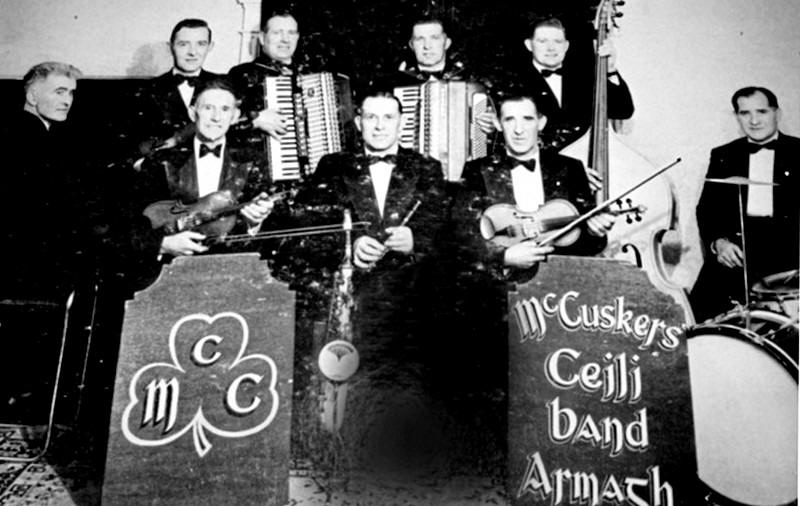
Evolution “Irish dance music was generally performed solo in the past, a single instrument playing with no accompaniment…up until the late 19th century…Ensemble playing was focussed in the development of ceili bands after the 1920s; this provided music for the newly developed Céilí bands…”. Also, Irish Céilí band music was played a lot on the radio in the 1930s and ‘40s. It was also kept popular by records form the 1950s.
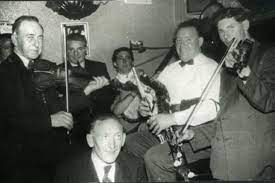 Pub entertainment: “The session developed at the same time as the pub became an important feature in Irish social life, this essential a post -WWII phenomenon…It is almost impossible to give a precise date of birth for the pub session…the concept was given a great boost by the music revival post-1950s, where the idea of playing music for listening to, and not for dancing to, became important…”
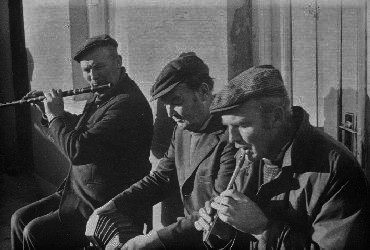 The Fleadh “The Fleadh Cheoil [Festival of Music]crystalised the importance of the session, as musicians from different parts of the country met and swapped tunes.” The Fleadh Cheoil [Festival of Music], is the world’s largest annual celebration of Irish music, language, song and dance. It attracts in the region of half a million visitors to the host town every year. There are mainly local country that run up to the main one, then 4 provincial fleadhs, then the main one. These festivals, competitions and meetings continue to nurture a culture and tradition of folk sessions.
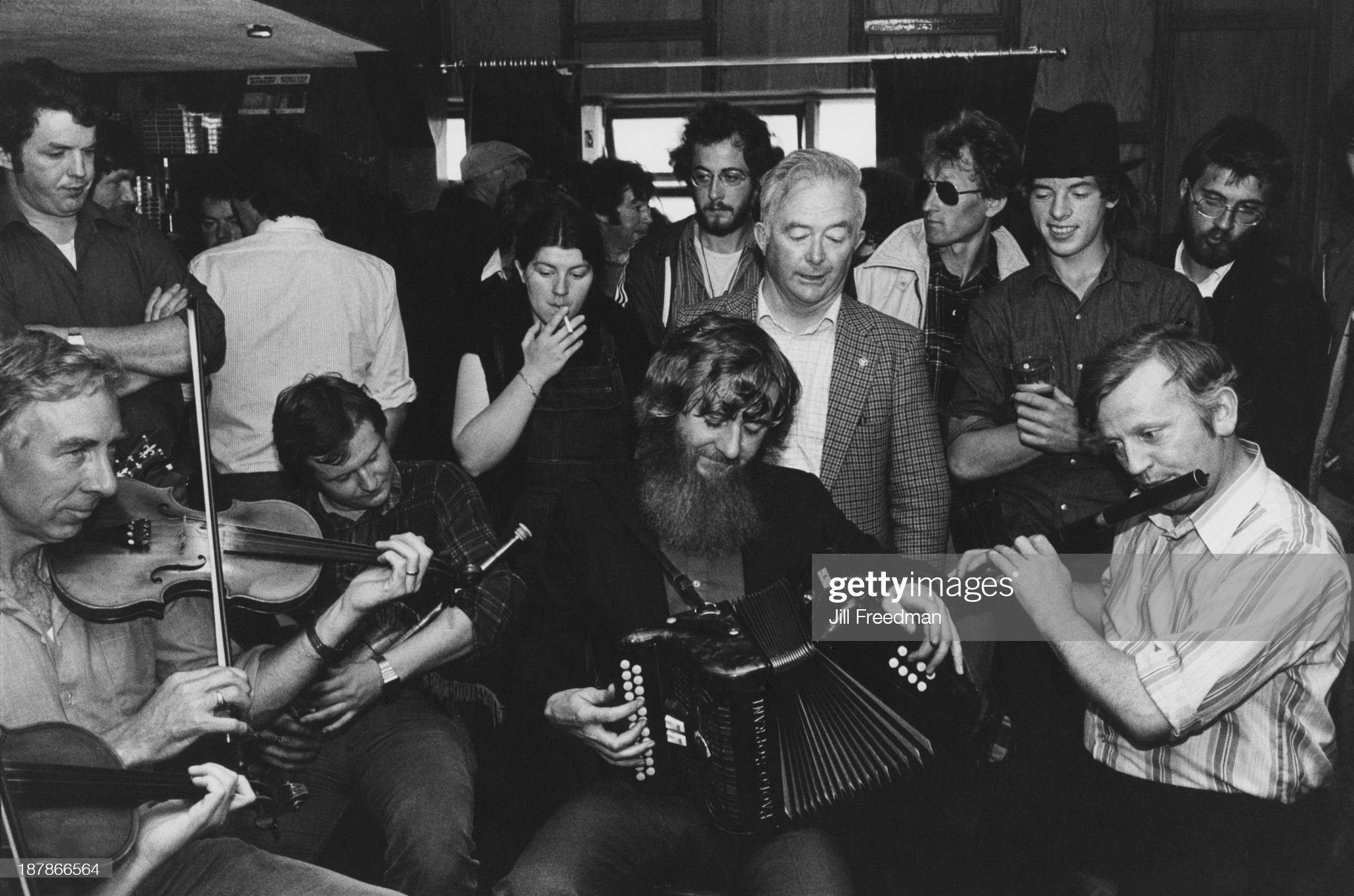
A band plays in Moloney’s pub during a Fleadh Cheoil, Listowel, Kerry, Ireland, 1981. (Photo by Jill Freedman/Getty Images)
A band plays in Moloney’s pub during a Fleadh Cheoil, Listowel, Kerry, Ireland, 1981. (Photo by Jill Freedman)
Jazz Before Folk: The term ‘session’ seems to have derived from the jazz-based term ‘jam-session’ and was not originally applied to what we call a session. newspaper reports dating from the 1970s tend to refer to ‘impromptu concerts’ but even by the mid-1960s fleadh musicians were already using the term ‘session’ freely among themselves in Ireland and Britain.
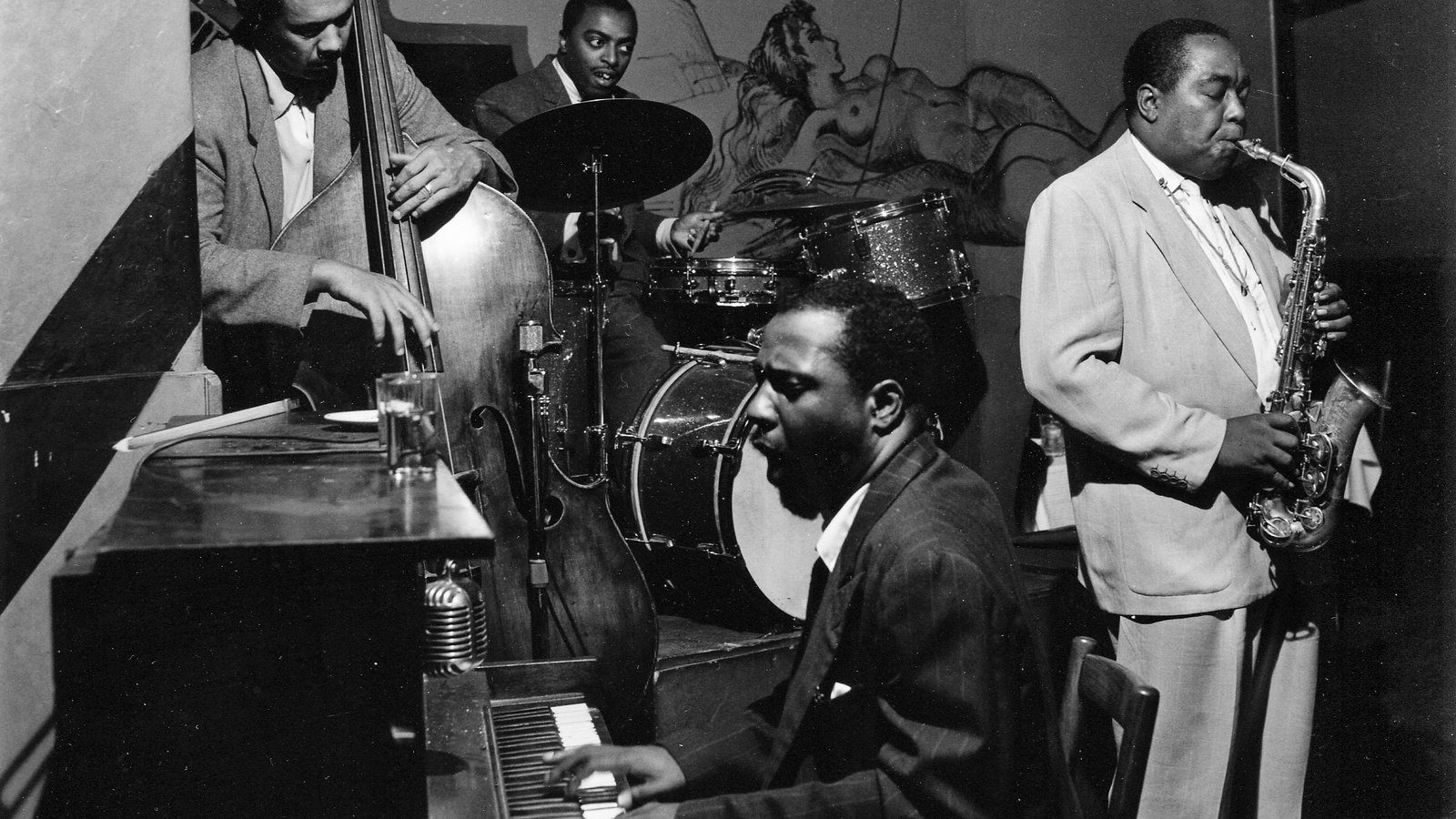 1953 NYC session. Charles Mingus, Roy Haynes, Charlie Parker, Thelonious Monk. Credit Bob Parent
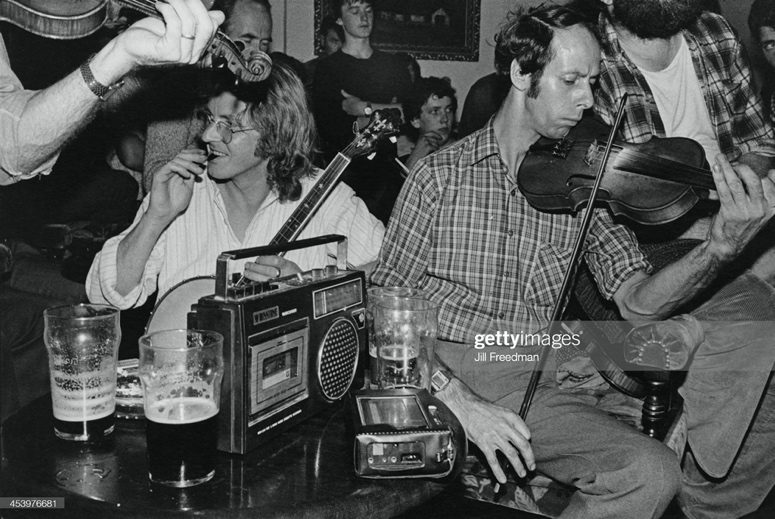 A band plays instruments for the audience inside a pub,
Ireland, 1981. (Photo by Jill Freedman/Getty Images)
Amateur and professional “Initially sessions were a purely amateur event..[pubs] were keen to have their bars known as centres of good music, began, from the…1970s to pay one or two musicians to turn up on a regular night. If this ‘seeding’ worked the publican was guaranteed a regular core of perhaps half a dozen musicians at a small cost. Almost all the current regular sessions are based on this principle, but at festivals and other like events, sessions are still normally impromptu and not commercially controlled.”
Confusing to Understand. Although to the outsider, a session appears to be a random event (where the instrumentation, location, duration, number of musicians present, music played, etc. all seem to be highly variable), in fact there are controlling factors. The musical behaviour in a session is largely controlled by therelative status of the people playing, with the higher-status musicians exercising more control over the way it develops. Status is conferred by such factors as instruments played, ability, reputation and age. The way musicians react to this is largely unconscious, but it is a useful tool in making sense out of what can seem to be a confusingly random series of events.
Key Points
- Sessions are mainly an Irish idea that the Scots have adopted.
- Folk sessions are younger than professional jazz music. With this is mind, it’s okay to a bit fussy about intonation, material, rhythm section chords and techniques since these were developed to high levels previously in jazz music. There’s nothing to say folk music has to be ‘rough and ready’ to be authentic and pure. I’m afraid that rough sounds rough – no matter what music you are playing! So we can always endeavour to improve and refine what we are doing and play in sync with each other with all the focus, energy, technicality, conviction and quality of a jazz musician.
- A session looks informal but is actually quite formal, and even a little structured.
- The session is run by 2 or more session leaders, who generally take the lead.
- The session leader will often invite people to play a tune or a medley of tunes or song. They also might not, the session might just appear to happen organically but that will be because it has evolved and developed over the months/years so that people know ‘the rules’ intuitively.
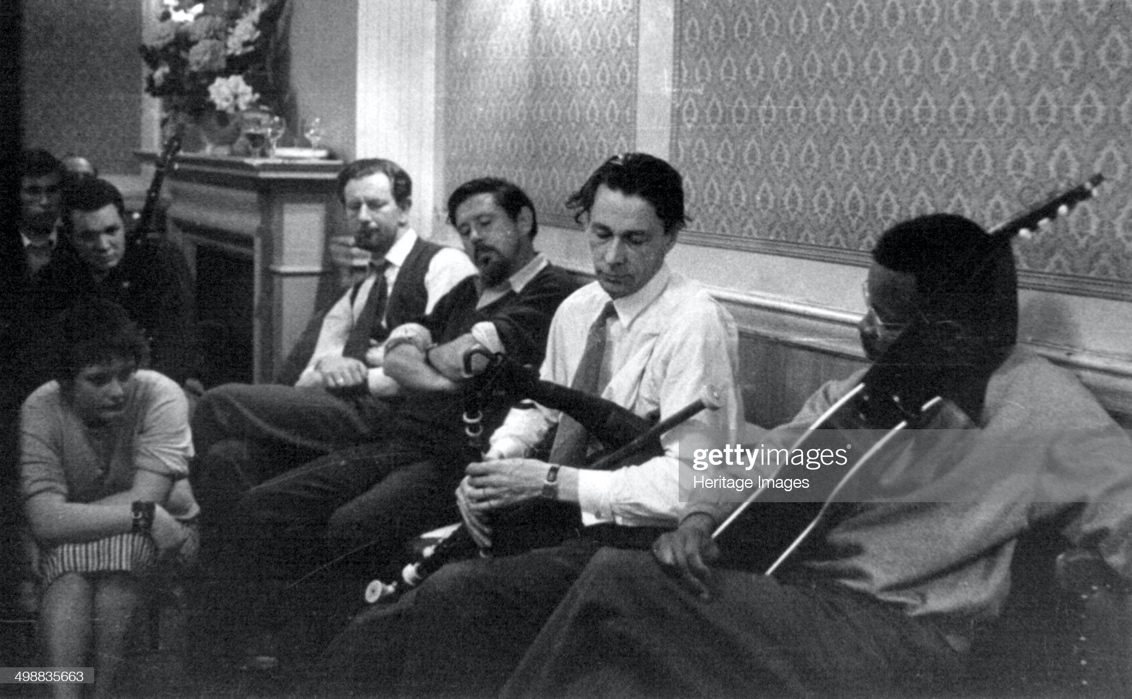 Seamus Ennis and Fitzroy Coleman, Enterprise Public House, Long Acre, London, late 1950s-early 1960s. Folk club session. (Photo by EFD SS/Heritage Images/Getty Images)
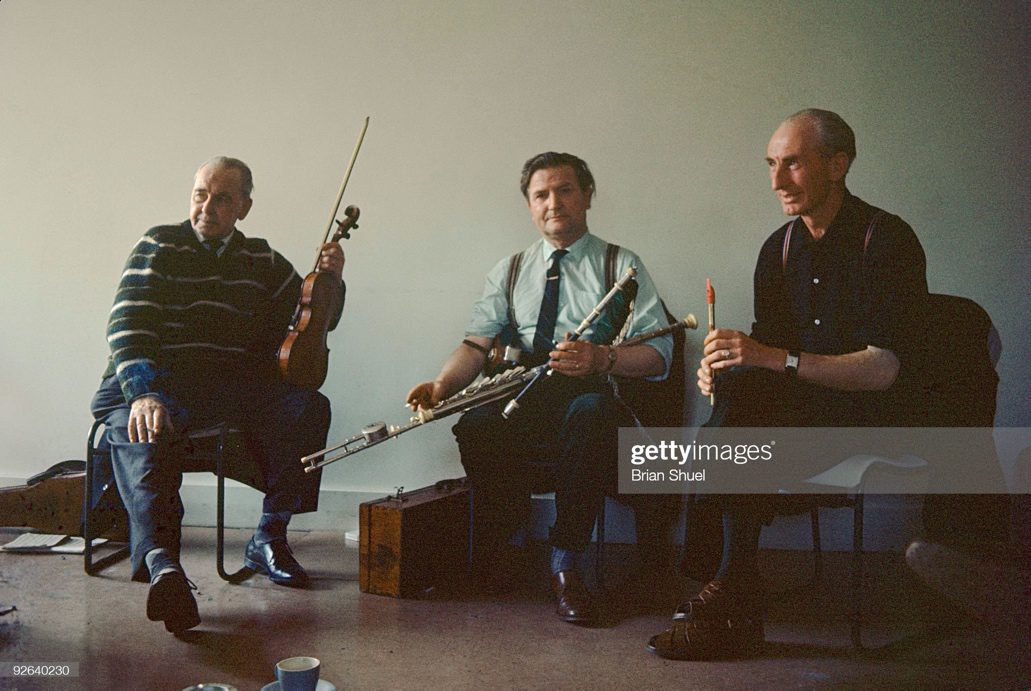
KEELE FOLK FESTIVAL Photo of Packie BYRNE and Felix DORAN and Michael GORMAN, L-R Michael Gorman, Felix Doran and Packie Byrne in a traditional Irish session at the Keele Folk Festival (Photo by Brian Shuel/Redferns)
Main themes
- PATIENCE: Leave gaps of a couple of minutes between sets
- MANNERS: Be considerate, be tolerant. Common sense, decency, and social awareness – picking up on social cues and atmosphere.
- AWARENESS: Try not to be ‘oblivious ‘– a set of blanket session rules will never solve all issues – some people in certain situations just need a discreet word from the session host.
- HUMOUR: Don’t take it too seriously. It’s your night off. But respect that folk get a real buzz from rhythmic, driving, soulful and uplifting session music, so the night is special to them.
- RESPECT: learn listening skills and patience from those players more experienced than you. Learn from those less experienced than you as well.
- BLEND: Blend into the music.
- DYNAMICS: How many gears does a car have? How many dynamic gears does your fiddle playing or guitar playing have? Start each set more gently in 1st gear and move up through the gears. Don’t have only one gear – don’t just be an ‘on’ or ‘off’ player. Don’t just come crashing in, slip in quietly.
Instruments
Lead players (melody or voice)
Voice, fiddle, whistle, flute, small pipes, mandolin, accordion, melodion, harmonica, concertina, etc
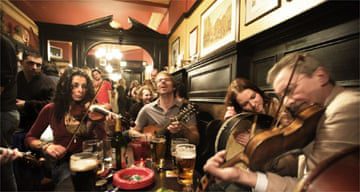
Sandy Bells pub session, Edinburgh, 2000s
Rhythm Section / Accompanists
- Guitar, keyboard, harp, bouzouki, bass – these are all chord players, and just like 2 two melody players, two chord players must be playing the same thing, i.e., the chords need to match (pretty much), that means someone needs to lead and someone needs to follow.
- Bodhran, cajon, bongos – danger. These are not easy-to-play, accessible instruments. It’s damn hard to play accurately in time – frequently people don’t know how to. Imagine what happens when you have 2 ever-so-slightly out of time bodhrans playing two slightly different grooves – think of two basketballs bouncing down a stairwell!
- Hand percussion – Please note shaky eggs and spoons are very seldom welcomed by other musicians in a folk session. While they seem easy-peasy to play, it is actually very challenging, even for a professional percussionist, to maintain a constant tempo without slowing/dragging the music back. They may seem subtle and quiet to the player, but in fact the sound really penetrates through the session and carries across the room. In my experience they are very rarely a successful addition to a trad session.
Prep
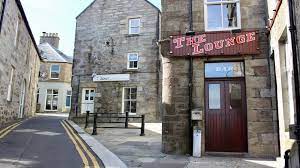
The Lounge Bar Lerwick, Shetland
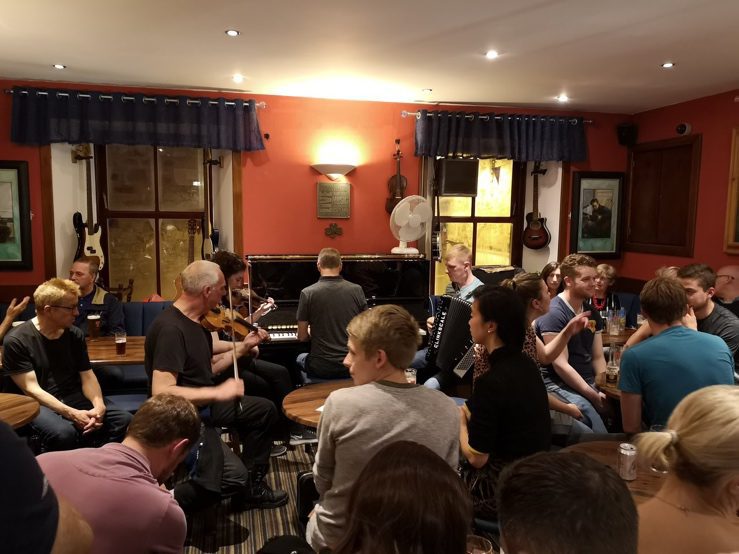
It’s true that sessions are spontaneous but that doesn’t mean you can’t come pretty prepared.
It’s always good to have some sets or songs up your sleeve before you turn up. So, do actually spend time at home each week ‘unspontaneous planning’ these wee sets. That’s a GREAT way of doing it. This could be:
- A medley/set of 3 jigs (all 2-parters) that go G major, B minor and finishing on A major.
- A medley/set of Shetland reels, or Scottish reels with a similar feel
- A slow tune in a solid tempo and time signature, i.e. Leaving Stoer or Hector the Hero. So not a rubato free-time slow air that nobody else can join in with, so you end up effectively playing a solo. If you do want to do a solo that’s okay, but keep it short. So less than 3 minutes.
- An uplifting chorus song, or a sadder chorus song, that’s easy for everyone to join in with “Wild Mountain Thyme”, or “Barnyards of Delgaty”.
Arriving at the Session
- Nerves: – You might be nervous. That’s cool, that’s normal. You might be excited, keen and eager to play.
- Chill: – Relax. Don’t be frantic and self-absorbed, or you’ll miss something really cool because you’ll be so caught up in your own wee world. Relax, help other people to feel relaxed, chat away, be curious about other folk, ask where they’re from and what they do, and listen to what they have to say. Distract yourself from your nerves if you’re a bit nervous.
- Seating: Think about where the main session leaders are likely to sit. They’ll want to sit next to each other in a place where they can see everyone.
- Like-Instruments near one another: Allow accompanists / rhythm section players have a line of sight, so let them sit near each other.
Music
Folk session , The Ben Nevis Bar, Glasgow, 2014-ish
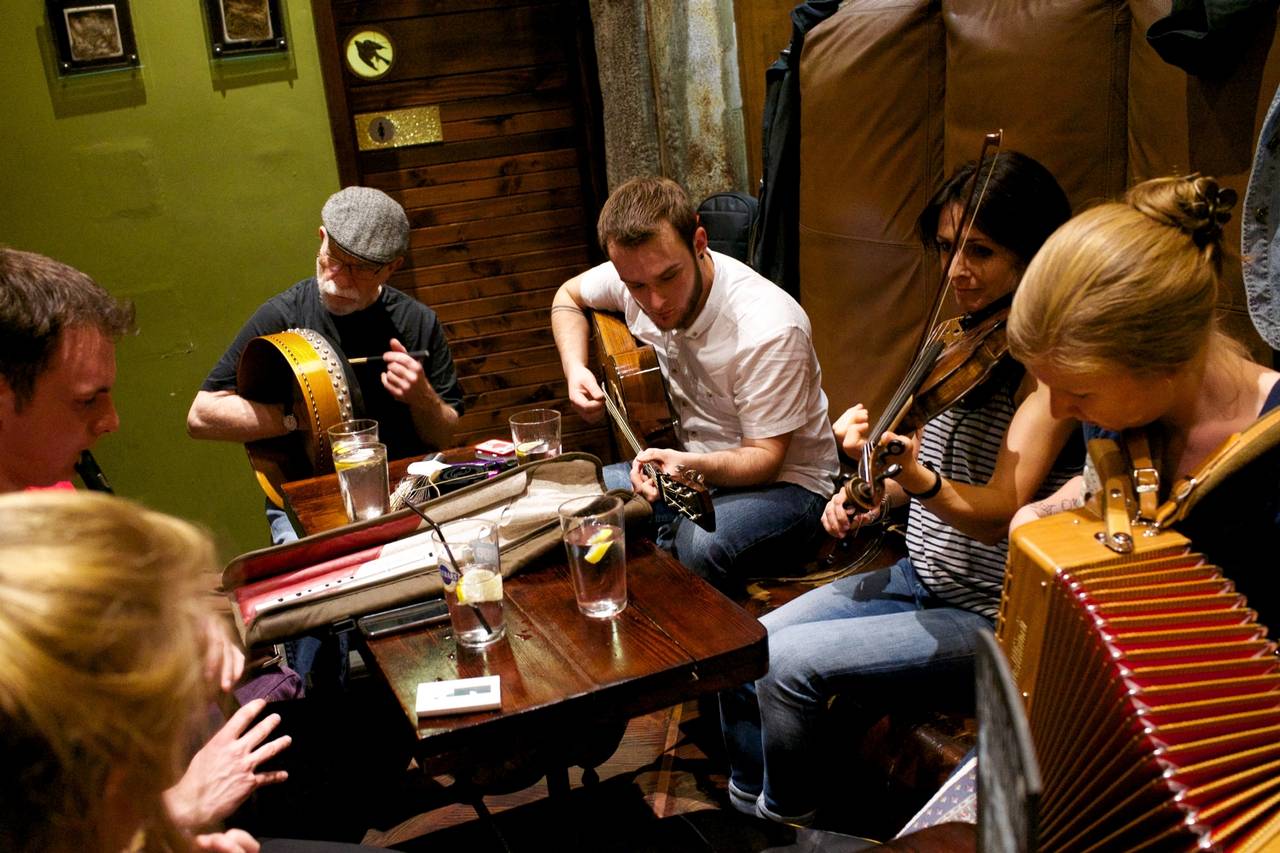
- Who leads the tunes? The session leader will likely start the night. Most people will lead a tune set at some point. But there is no rule to say that each and every person must take their turn one-after-the other. It’s not meant to be ‘fair’. It’s not a queue – that’s might feel a bit unnatural or forced. Some people won’t lead/start a set of tunes at all, others will lead several sets. Unless you are the session leader, maybe don’t start another set of medleys/sets immediately after you’ve just led another. Let people take their turn naturally, or let the session leader guide that process.
- Variety: It’s nice to play a set of jigs after reels have happened, and vice versa. It’s nice to have a song every once in a while, or a slow tune, or a set of marches or strathspeys.
- Pause between sets is way way longer than a concert: Allow a couple of minutes between each number. Let people relax.
- Noodle: Try not to noodle too much – sometimes you need to noodle a bit for tuning purposes, but remember that incessant noodling is actually very challenging, annoying and unsettling for anyone to listen to.
- Average volume of your playing How loud are you playing? What about dynamics …”what do you mean dynamics….I’m playing as loud as a I can?” Are you playing too apologetically – do you need to project your sound more and play-out. Let yourself be led by the natural builds and dips, the waves of dynamics (louds and softs, builds and dips) – don’t just plough on right through everything at the same volume (unless you a piper where you volume is fixed).
- Secure: If you are leading a set then play things you are most secure on – avoid risky insecure tunes that might stumble lots or feel frantic, out-of-time and confusing.
- What key: Give the chord player a heads up on the key
- Bring in the accompaniment gradually: Let the lead melody player find their groove and follow that.
How many times per tune? How many times you play each tune before moving on? If it’s a standard reel (tw 8 bar parts with repeats then at least 3 or 4 times if folk are joining in but maybe jyst twice if you find yourself on your own. Maybe just play a 4-parter twice as it’s a long tune anyway.
- Chord matching: Let one chord player take the lead (session leader), and try to follow their chords. TIP: when busking along to chords the full standard guitar tuning triads have more potential to clash – use ‘open’ 5th chords (with no thirds in them) as they immediately blend better.
- Catching tunes (to learn later): covertly record a tune you like on your phone’s voicememos app, then save it onto your desktop the next day, listen back while you’re making the tea one afternoon. Sit down and learn it. Did you ask someone for the name of the tune – maybe you can find it online via thesession.org, tunearch.org or google image search. Do you have a process or system of learning new stuff in place, e.g. a tune wishlist, hitlist or ‘rolling list’? Maybe you need to create one and set it in motion. Try it for a few months.
- Catching tunes (on the spot): advanced technique – some folk are masters of this (Adam Sutherland, Jarlath Henderson, Michael McGoldrick to name but a few). Try to do it subtly.
- Local tunes: wouldn’t it be cool for us Badenoch & Strathspey folk to play tunes from this area that were borne in this area, inspired by this area or made popular here? Let’s get some ace local repertoire together eh?!
- Names of the tunes do learn the names of tunes and try to find out who wrote them. Otherwise your overall experience of folk music could be compared to someone watching a film without the sound muted. You’re missing the story, the heritage, the heart and the soul of the music. It puts things in context. Gives you depth and perspective.
MacGregor’s Bar, Inverness
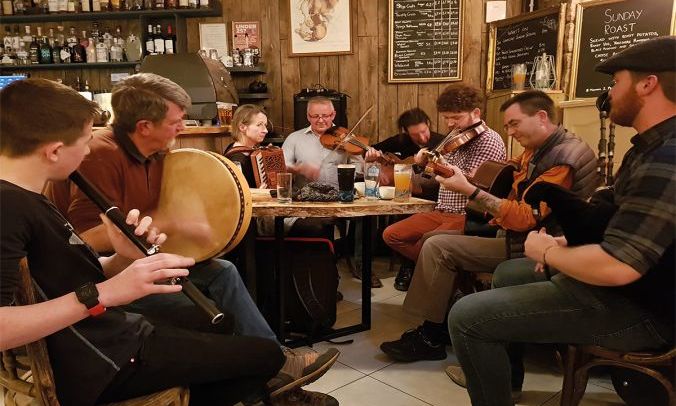
Some interesting statements from thesession.org.
These are real statements of things written on a famous online forum about folk sessions. Some of the statements below I agree with, others I don’t. Some apply to our Storylands Session, some probably don’t. See what you think of them.
- “A session will evolve. A format each week will emerge.”
- “Matt Molloy said that a good session is a place were folk LISTEN to one another. Probably he means, listen to eachother while playing, listen to suggestions from musicans and audience, and probably be patient and listen to solo playing.”
- “Do be sensitive, polite, self-critical, and fun. Don’t be rude, insensitive, self-absorbed, and boorish. My catchall advice ‘Just relax and enjoy it.’
- “It would be nice to think of sessions as just another group of socially interactive people but unfortunately there not. They are a strange gathering of people who have nothing more in common than the diddly thing. There are plenty of people I love having tunes with, people I love to hear play, but, when it comes to socially interacting? Blank. And I bet they’d say the same about me This is not a bad thing, at least you meet people you wouldn’t ordinarily.”
- “Open, unpaid, pub sessions are a community, and the same rules apply as would in other communities. ‘Be considerate’ is definitely the top rule, but another one could be: ‘Be tolerant’. “
- “I’ve been to sessions where people are being very selfish, and a discreet word to them is in order. However, being quick to impose the ‘rule of law’ is also a kind of selfishness, especially if it is done without some kind of consensus feeling within the group. What that does is impose one’s own rigid expectations of what a session is ‘supposed to be’ on others. I’ve played in very traditional sessions. I’ve also been to some pretty open non-traditional and way-cool sessions in a number of countries. My opinion (and it is only my opinion) is that the relaxed and experimental sessions are by far the most interesting (to players and audience) and friendly. Typically these sessions have lacked a dominant personality who imposes themselves upon the others (either by hogging the session or policing it).”
- “Well, there are different types of session with different levels. If you are a beginner (or your level is not that high no matter how long you’ve been playing for), and you go to a higher-level session, you know that you are going to be listening more that playing. I normally play what I feel like and not what beginners want to play because that’s BORING, and getting bored is not the point of the session.”
Live music at Hootananny, Inverness.
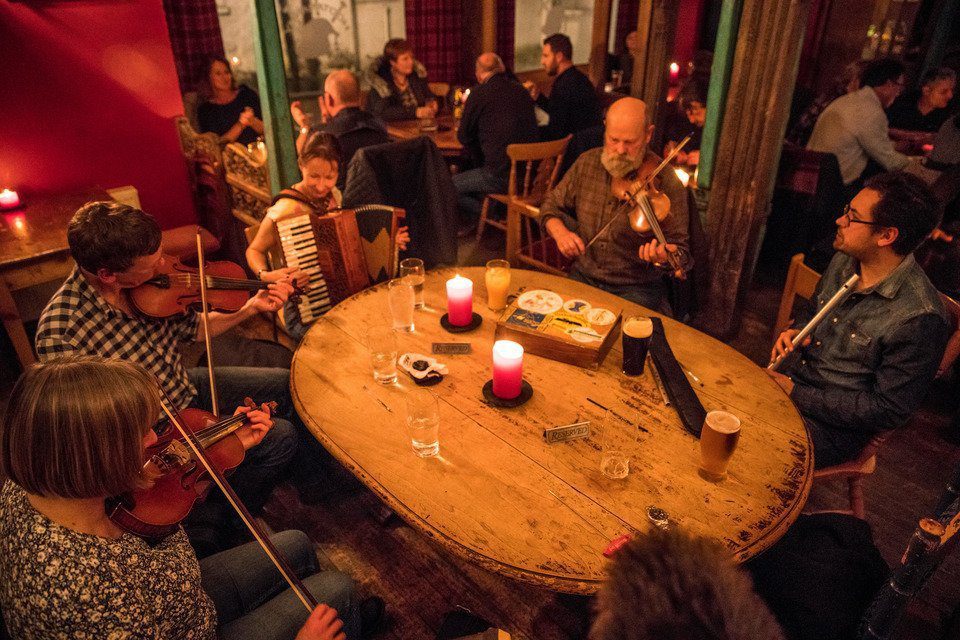
- “As a regular session visitor, I find myself starting sets and trying to get a feel of what their repertoire is. I do try and ask do you know this, do you know that (and by the same token, if you have arrived part way through the sesh – has anyone already played thus?). But the rule of thumb should maybe be – judge how quick the regulars are at picking tunes up and if people join in, play the tune two or more times, if no one joins in (and it isn’t an easy tune or they are usually quick on the uptake), play it once and move on to another. I do feel a bit of reticence starting two sets together, but if I leave enough gap for an opportunity for others, or ask – do you know this, they usually give you permission by saying – yes we know that.”
- “On some nights, everyone sits around, asking other folks what we should play, and no one comes up with anything, or comes up with one tune instead of a set. Lots of meandering. There are times when I would give my right arm (well, maybe my right leg since without my right arm, I wouldn’t be able to play) for someone to come along and start off two or three strong sets.
- It is all about balance, sometimes you need more leadership, sometimes you need less. And even though it is harder than remaining silent, it is always better to speak the unpleasant truth and get it in the open.”
- Since when was “pandering to learners and lesser players” or “playing donkey tunes” part of session etiquette, anyway? It’s nice to be inclusive but visitors to a session shouldn’t expect this. Surely, it’s also good etiquette for them not to expect the “better” and more experienced players to pander to them. By all means, they should go along but “listen and learn”, if they don’t know all the tunes. Having said all that, most decent human beings (as opposed to players) will surely want to give a newcomer a chance but this doesn’t mean that they have to descend to a lowest common denominator. They could either include the occasional well known set or offer an opportunity for the visitor to start a tune. This only need take up a few minutes and then everybody’s happy.”

Badenoch Heritage Festival 2024 – events announced
Badenoch Heritage Festival 2024 – Save the dates
Badenoch Heritage Festival 2023 – events announced
Badenoch Heritage Festival 2022 – events announced
Guided walks for Scotland’s Year of Stories
Storylands Sessions Trad Table #6 with Adam Sutherland WORKSHOP


